You can always custom build your own custom course, Why not explore our building blocks library or book a consultation with our team
What we solve
Helping organisations turn change into performance
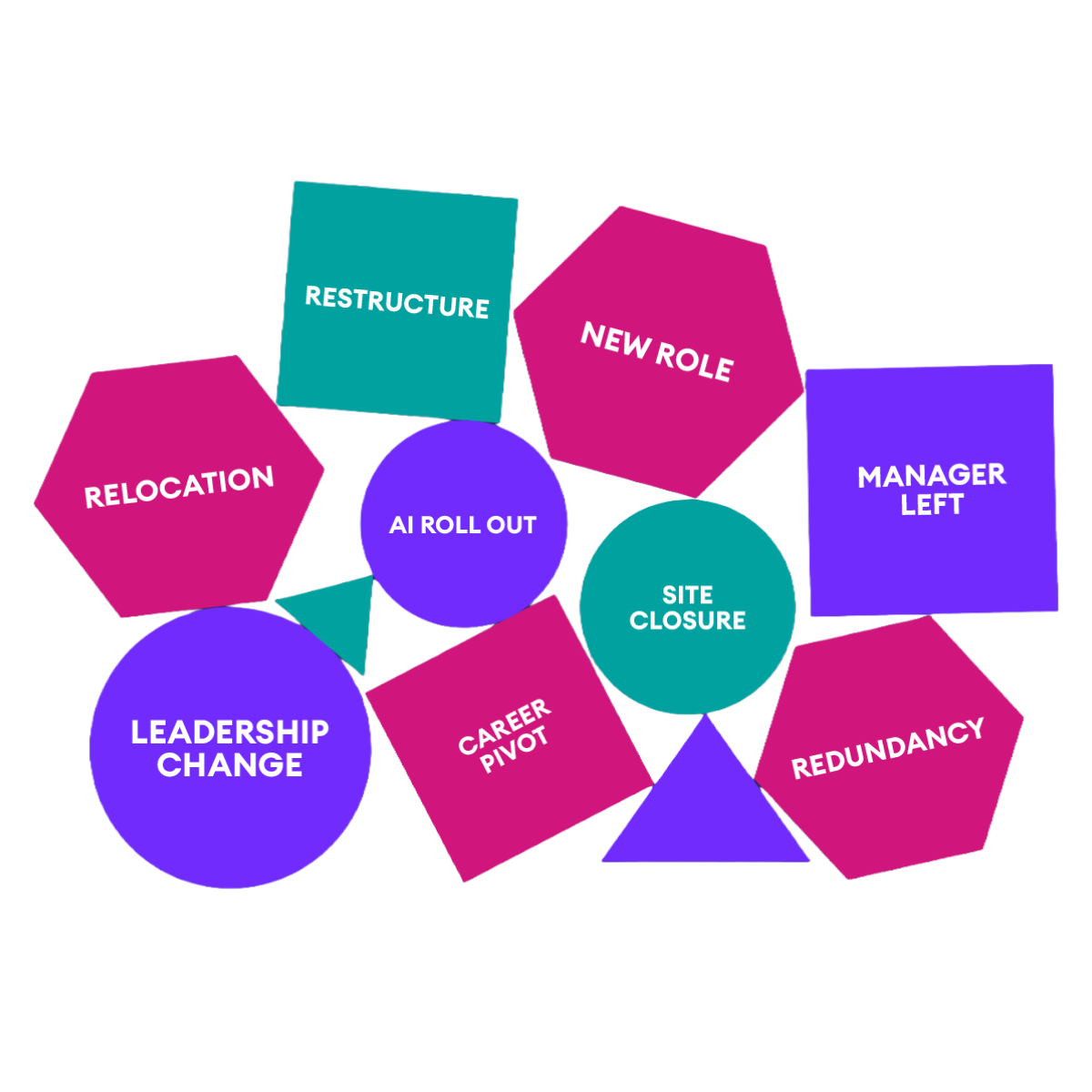
Organisations are changing faster than their people and operating models can adapt. The plan is rarely the problem. What’s missing is the leadership, manager and workforce capability to execute it.
Our approach to performance measurement
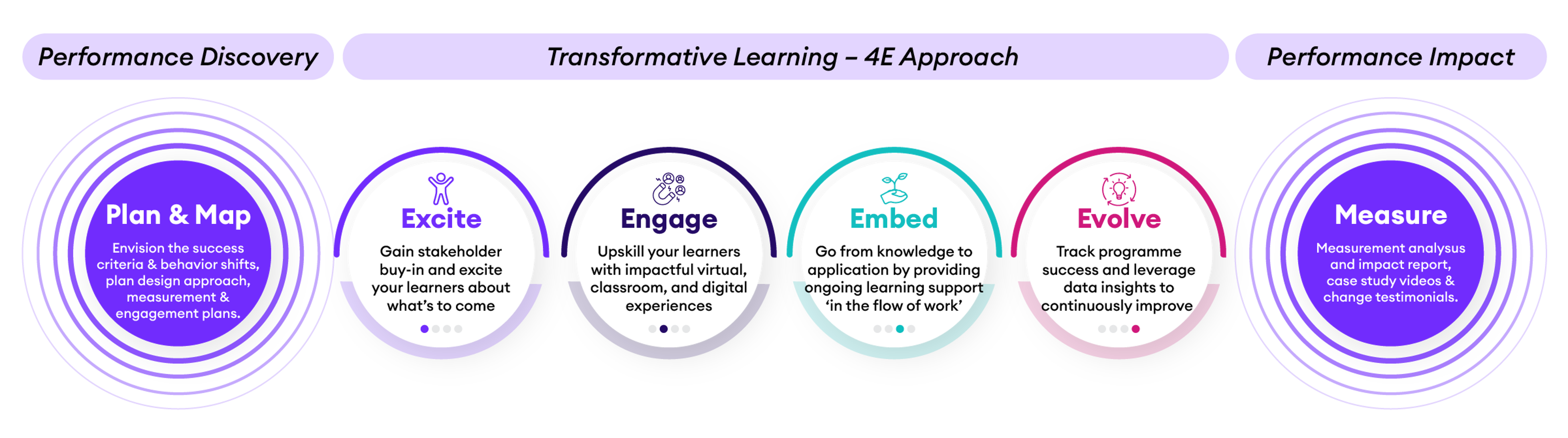
At Hemsley Fraser we have the end-to-end expertise to discover, deliver and sustain the performance change you need for your organisation, no matter how big or complex.
Where we can support you
Most organisations end up buying transformation support twice - a consultancy that understands the problem but can’t build the answer, and a provider who can deliver at scale but wasn’t there when the problem was diagnosed. The handover between them is where context and half the reasoning quietly disappear.

Diagnose
Start with the business priority, not a catalogue. What must improve, what would people need to do differently, and what’s actually getting in the way. Sometimes the honest answer is that it isn’t a learning problem - better to find that out early.

Build
Design the response around the behaviours the change requires. Use our 100+ topics as raw material, combine them into a journey, or start from a blank page.

Execute
Deliver it consistently wherever your people are. 90+ countries, 70+ languages, 500+ facilitators selected for the markets they work in rather than flown into them.
Your people have been told what's changing... but nobody's shown them how to handle it.
Transformation doesn't land in a strategy deck. It lands in the moments between a leader and their team: the first conversation after an announcement, the meeting where priorities shift, the one-to-one where someone asks what this means for them. Those moments decide whether people understand the change or quietly work around it.
Our five capability areas help leaders at every level carry change, from senior leaders setting direction to the front-line managers who make it real day to day. Each is a set of topics you can run as a ready-made session, combine into a learning journey, or use as the starting point for something built around your organisation.

Transformation we’ve helped land
Transformation at scale usually costs an organisation one of two things: consistency, or local relevance. These three kept both - across 21 countries, 36 cohorts and seven languages.
In each case the human side was treated as the work rather than the wrapper, and the result was measured against something specific rather than a completion rate.
Global FMCG
The situation
1,900 managers across more than 21 countries, languages and time zones. A new leadership standard was needed everywhere, without a consistent local context to build it on.
What we built
One programme with coordinated multi-country delivery, designed so local relevance never came at the cost of a single consistent experience.
The impact
4.5 out of 5 satisfaction sustained in every country and every module · one standard held at scale rather than fragmenting into local versions
BAE Systems
The situation
Two distinct leadership populations across a workforce of tens of thousands, needing development at scale without the experience changing by cohort or geography.
What we built
Managing People and Leading the Future: two hybrid programmes delivered across 36 global cohorts, combining interactive sessions, peer coaching and one-to-one coaching.
The impact
96% participation · 100% of delegates would recommend it · NPS rising past 29 · two Brandon Hall Group Gold awards
CHC Helicopters
The situation
A frontline leadership population spread across seven countries, where a consistent standard mattered but delivering it in English from a single team would have missed most of the point.
What we built
The same three-day experience for every leader, delivered face-to-face by local facilitators in each country’s native language - from shift supervisors to the CEO.
The impact
350+ leaders developed, around 90% of the leadership population · seven countries, seven languages · one identical programme
Worth noting
The chief executive and the full senior team completed the same three days as their frontline supervisors.