You can always custom build your own custom course, Why not explore our building blocks library or book a consultation with our team
Rethinking Learning Impact
Designing for Performance from the Start
Learning impact is too often assessed at the end of a programme—when it’s already too late to influence outcomes. Rethinking Learning Impact sets out a different approach: designing learning for performance from the outset, embedding impact thinking into every stage of the learning journey.
This page brings together the full depth of that thinking into one comprehensive guide for Heads of L&D, Learning Leaders, and Training Managers who are under increasing pressure to demonstrate value, relevance, and measurable business impact.
1. Why Learning Impact Needs Rethinking
Too often, learning impact is assessed only at the end of a programme— when it is already too late to influence outcomes. In this retrospective model, L&D teams are left trying to justify value after delivery, using metrics that focus on activity rather than performance.
As organisations face economic pressure, digital transformation, and reduced visibility in hybrid workplaces, expectations have shifted. Business leaders want clearer evidence of how learning improves performance, supports strategic priorities, and delivers measurable value. Completion rates and satisfaction scores are no longer enough.
To meet these expectations, learning impact must be designed in from the outset. That means reframing impact as performance improvement—defined by observable behaviour change, capability growth, and outcomes that matter at individual, team, and organisational levels.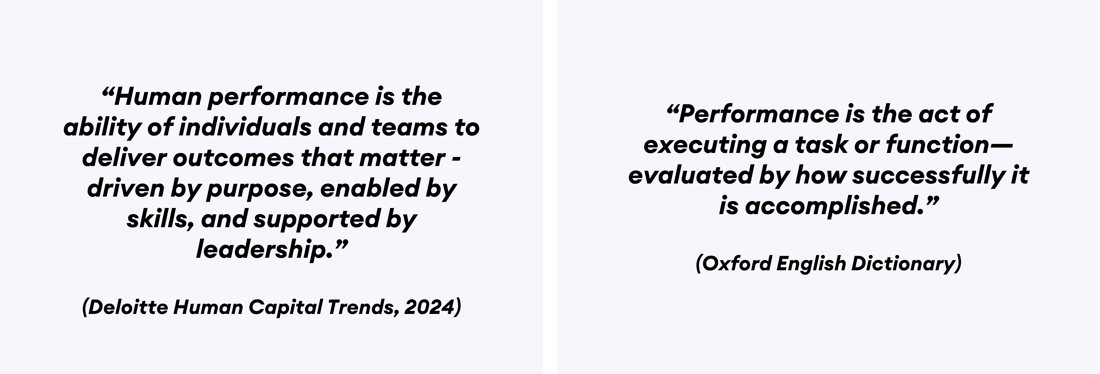
2. From Activity to Performance: Designing Learning That Delivers
Designing for performance requires a shift away from content-first thinking towards a more human-centric, context-driven approach. Learning experiences must reflect real work, real challenges, and the behaviours that drive success in role.
Performance does not exist in isolation. Culture, leadership, clarity of expectations, access to resources, and incentives all shape whether learning is applied and sustained. Without the right environmental conditions, even well-designed learning interventions struggle to translate into meaningful change.
By aligning experience design with performance goals—and considering cultural and leadership factors from the start—L&D can move from delivering learning activity to enabling real-world performance.
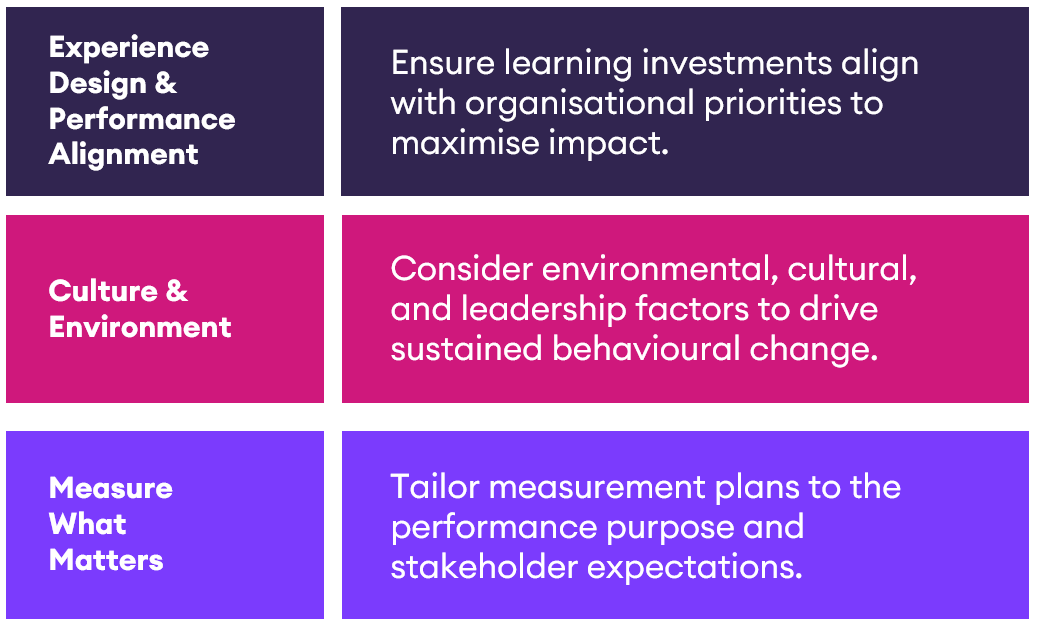
To design learning that delivers real performance improvement, the paper highlights three foundational pillars. Together, they ensure learning is aligned to business priorities, designed for real-world application, and measured in ways that demonstrate meaningful impact.
3. Measure What Matters: Proving Value Beyond Participation
Many organisations measure what is easiest rather than what is most meaningful. Attendance, completion, and satisfaction data provide limited insight into whether learning has made a difference.
Measuring what matters means focusing on outcomes that stakeholders care about. This includes behaviour change, confidence and capability growth, performance improvement, and progress against business priorities. Different stakeholders value different evidence, and impact measurement must reflect this reality.
Both quantitative data and qualitative insight have a role to play. In some cases, ROI is appropriate to demonstrate tangible value. In others, ROE - Return on Expectations-offers a more realistic way to capture success, particularly where behaviour change and engagement are the primary goals.
“Aligning learning and development with your organisation’s top priorities is critical to driving success and adapting during volatile times” (HBR, 2025)
4. The Plan–Map–Measure Framework
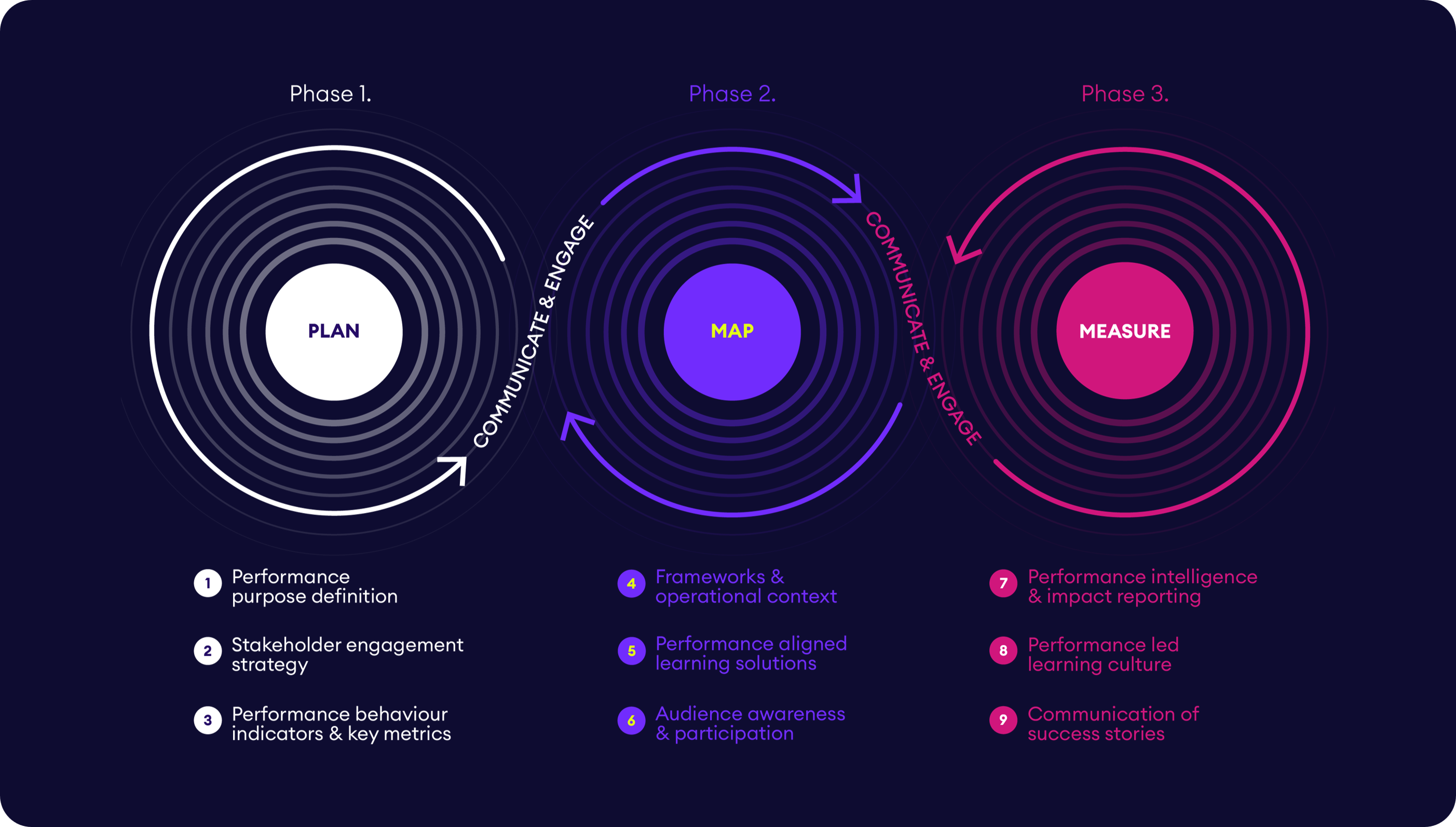
To embed impact throughout the learning journey, our paper introduces the Plan–Map–Measure approach—a practical framework for designing learning with performance in mind from day one.
- Plan focuses on defining clear, business-aligned goals and engaging stakeholders early to agree what success looks like.
- Map brings performance and measurement into the design process, linking learning activities to desired behaviours and outcomes at multiple levels.
- Measure ensures success is tracked, analysed, and communicated using meaningful data and credible impact stories.
Rather than retrofitting metrics after delivery, this approach integrates performance thinking into every stage of the learning experience.
5. Turning Insight into Impact
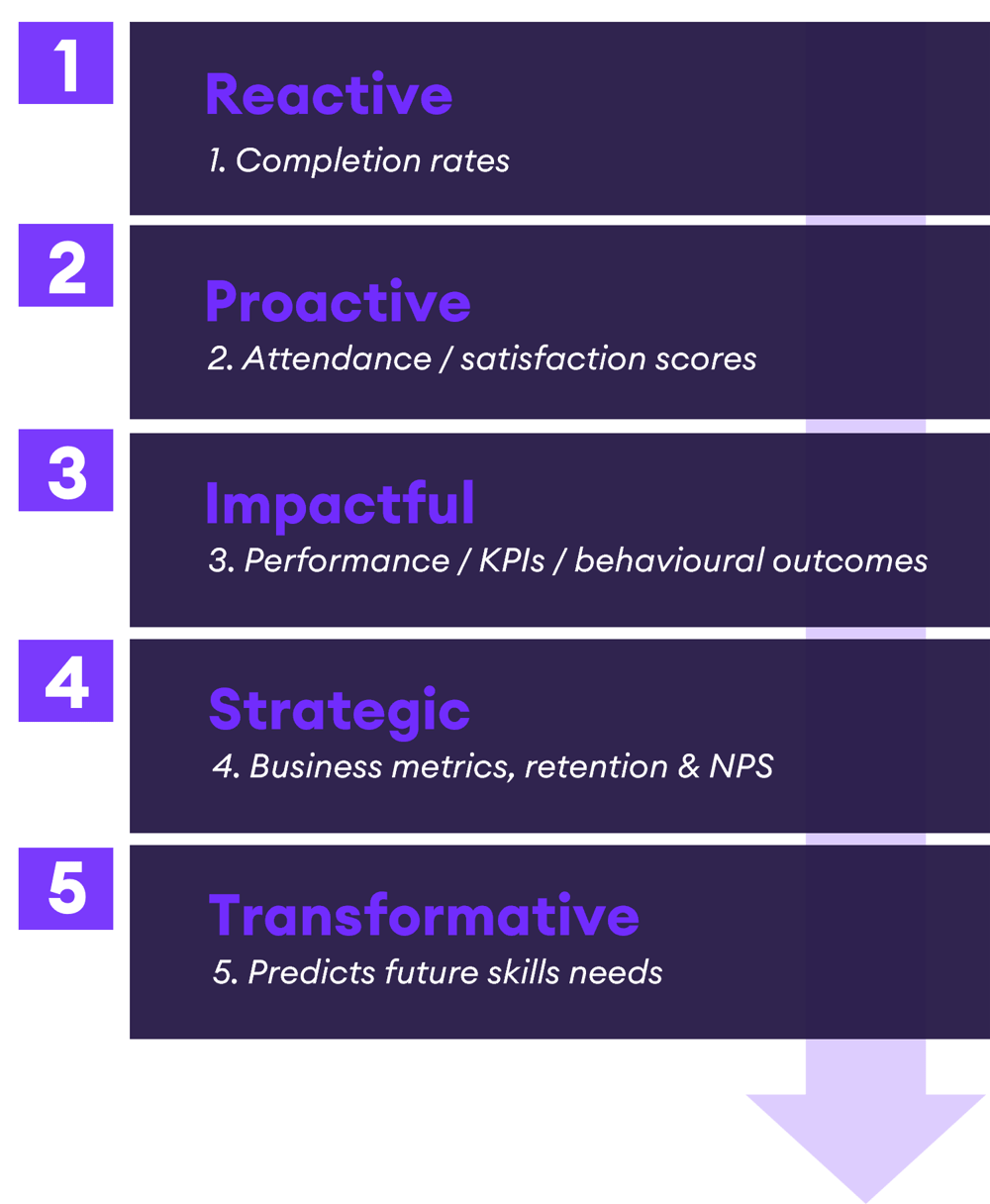
Measurement maturity develops over time. Not every programme can immediately demonstrate business-level impact, and that is not a failure. The key is to recognise constraints early and build a realistic measurement strategy that focuses on what can be influenced.
Starting with learner impact and observable behaviour change allows L&D teams to demonstrate progress while building confidence, credibility, and capability over time. As data access improves and stakeholder relationships deepen, measurement can evolve to include broader performance and business outcomes.
When learning is designed for performance, impact becomes clearer, stories become stronger, and L&D is better positioned as a strategic partner in organisational success.
Learning impact – measurement maturity scale
Where would you place your organisation / department?
Measurement model adapted from 360Learning.
6. Key takeaway
Learning impact is not something to prove at the end—it is something to design for from the start. By planning with purpose, mapping learning to real performance outcomes, and measuring what matters, L&D can move from activity reporting to demonstrating meaningful, credible value.