Research & insights

2026 L&D Impact Survey

 AI is reshaping the agenda. Economic pressure is real. But the 2026 Hemsley Fraser Learning & Development Impact Survey makes clear: the function's greatest opportunity lies in human capability. The businesses that thrive will be those that develop people, not just technology.

In partnership with HR Grapevine & Training Industry

Artboard 1 44 (1)
86%

UK respondents cite core people-management skills as the #1 leadership priority

72%

see developing leaders who can grow, reskill and retain talent as a priority

70%

of US organizations cite AI and digital fluency as their most critical future skill

1 in2

say more effective communication & engagement strategies will accelerate L&D's impact on business success

For L&D, 2026 is another year of high disruption and high expectation. Organisations are transforming in the face of AI, economic uncertainty, and talent challenges and the pressure lands squarely on L&D.​

Deliver critical skills, support engagement and retention, prove measurable value. The context has shifted, but the core pressures hasn't. ​

In 2025, L&D delivered despite headwinds and stretched resources, experimenting with AI while meeting growing demand for both technical and human skills. What's changed is that AI transformation is 12 months further on, and business expectations have moved with it.

As L&D understands it, AI and digital skills are the most critical for business, but human capabilities are the second most important consideration for the rapidly evolving world in which L&D operates. The pressure is on in both regards. As one respondent said: "We're transforming faster than our people can reskill.“​

Indeed, digital transformation has only enhanced the importance of human skills. AI and digital skill sets might be considered the most important capability set L&D has to deliver, but the remaining four of the top five are human-focused: communication skills, emotional intelligence, customer service, adaptability, change readiness, and leadership and management capabilities. Indeed, for the third year running, the L&D innovation respondents want to see more of is human and soft skills development.​

Human capability: the defining priority

Human skills & capabilities

The increasing centrality of AI notwithstanding, 2026 respondents were clear: the human still defines L&D. An overwhelming majority of UK respondents identified strengthening core people-management skills as the top leadership priority for the next 12–18 months.

"Empathy-driven coaching is our biggest leadership need — hybrid working and AI integration have reduced natural, in-person connection and real-time observation." — 2026 Survey Respondent, UK.

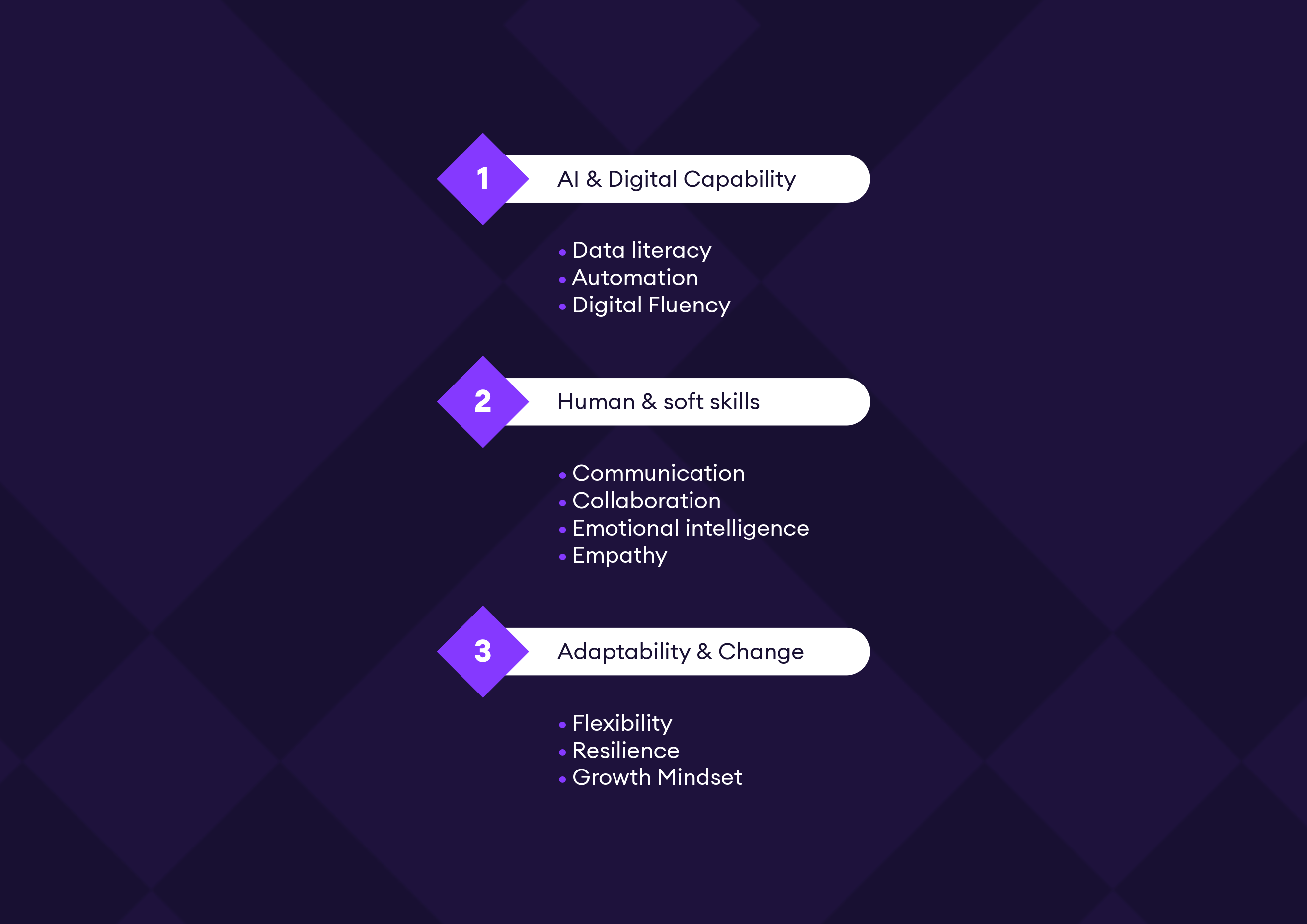
  1. AI & Digital Capability - Data literacy, automation, digital fluency
  2. Human Skills - EQ, communication, collaboration
  3. Adaptability & Change - Flexibility, growth mindset, resilience
  4. Leadership & Management - Coaching, accountability, decision-making
  5. Performance & Accountability - Goals, metrics, follow-through
L&D Impact Survey Background-17

The root causes behind the leadership challenge

Leaders are under more pressure than ever — navigating AI-driven transformation, disengaged teams, and a talent landscape that keeps shifting. The expectations on them have never been greater: communicate with clarity, coach and develop their people, drive performance, and lead through constant change - all while managing competing workloads and an increasingly complex working environment.

Over seven in ten respondents want core people-management skills prioritised over the next 12–18 months. And it's not hard to see why. Many organisations have long relied on promoting their best individual contributors into leadership roles - without the training, support or tools to succeed. The result is a generation of managers who are technically capable, but not people-leadership ready.

1

Accidental managers

People promoted into leadership without training, leaving them without the confidence or capability to lead effectively
2

Unchallenged underperformance

Leaders avoiding difficult conversations around performance because they lack the skills or tools to have them
3

Leadership disconnect

a widening gap between senior leadership and frontline employees, driven by poor communication and inconsistent standards across the organisation
4

Eroding trust

leadership gaps actively undermining psychological safety and engagement, particularly during periods of change and transformation

AI: from hype to considered implementation

There is broad functional belief that AI can drive business success - and appetite for AI-driven learning has grown 8% year-on-year. AI use in L&D has rebounded to 33% in the US after a 2025 dip, optimism around Gen AI adoption has jumped from 29% to 38%, and six in ten respondents want to scale AI use further having seen it work in pockets of their organisation.

"The organisation has not yet built a self-sustaining leadership pipeline with the capability, confidence, appetite, and system-level support needed for future leadership roles." - 2026 Survey Respondent, US

AI graphic-18 (1)

Curious about the evolving role of learning & development?

We help organisations build the human capabilities that drive performance — from leadership development to in-person learning, designed for the way people actually work.

{