You can always custom build your own custom course, Why not explore our building blocks library or book a consultation with our team
What is the top leadership priority for 2026?
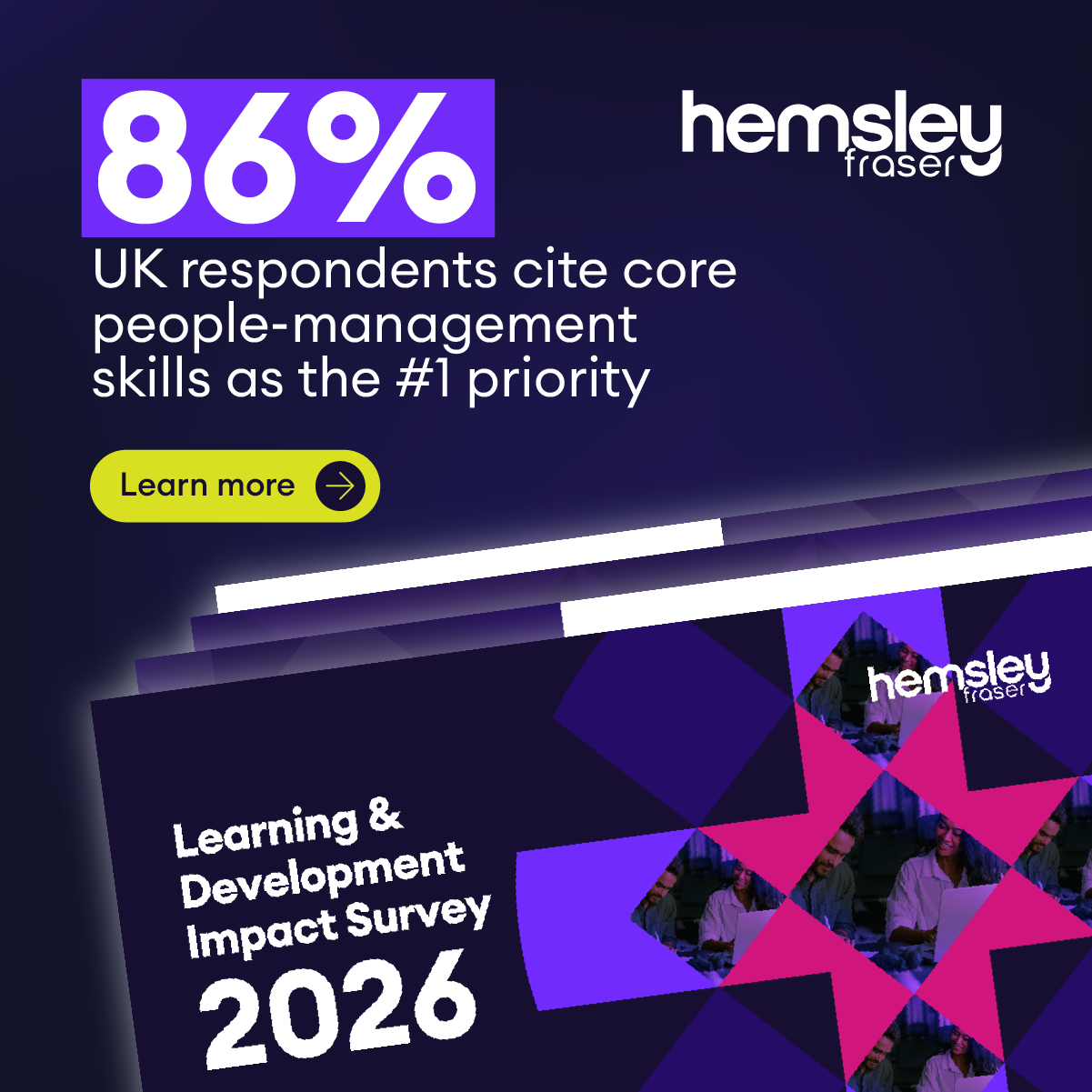
The single biggest leadership priority for 2026 is core people management. In the 2026 Hemsley Fraser L&D Impact Survey, 86% of UK respondents identified strengthening core people-management skills - coaching, feedback, and performance conversations - as their top priority for building leadership capability over the next 12–18 months. Across all regions, 72.15% said the same, making it the clear number-one answer.
For HR and people teams, that figure is worth pausing on. In a year dominated by AI, transformation, and economic pressure, the capability organisations say they need most isn't technological - it's human. The appetite for leadership development hasn't chased the newest trend; it has returned to the fundamentals of managing people well.
Why people-management skills top the list
The survey points to a clear driver. Transformation is placing real strain on the relationship between managers and their teams. As structures change, roles shift, and uncertainty rises, the managers who can hold a steady conversation, coach through change, and give honest, timely feedback are the ones who keep people engaged and performing.
The second-placed priority reinforces the theme. Nearly half of respondents (46.71%) said they want leaders better equipped to grow, skill, and retain talent — a direct response to the retention and engagement pressures so many businesses are carrying into 2026. Both of the top two priorities, in other words, are fundamentally about people, not process.
When respondents were asked to name the single biggest capability their organisation needs to strengthen, the answers clustered into four themes: clear communication and alignment; core people skills such as coaching, mentoring, empathy and trust-building; performance management and accountability; and leading AI and digital transformation. Three of those four are human-centred — a useful reminder that even in a tech-driven agenda, the differentiator is how leaders behave, not just what they know.
Where the gap usually sits: first-time leaders
In most organisations, the sharpest need isn't at the top — it's on the frontline. Businesses routinely promote strong technical performers into leadership roles and then wonder why they struggle. The missing ingredient is rarely capability in the day job; it's the human skillset of leading others: setting expectations, having challenging conversations, building psychological safety, and giving feedback that motivates rather than deflates.
This is why so much of the demand concentrates around team leaders, supervisors, and first-time managers — the people having daily conversations with employees, and whose behaviour most directly shapes morale, performance, and whether talented people stay.
What this means for your
L&D strategy
-
Don't assume “leadership development” means senior leaders. The loudest demand is around frontline and mid-level managers. Prioritising them tends to deliver the fastest, most visible impact on team performance and retention.
-
Prioritise practice over theory. Coaching, feedback, and performance conversations are skills people build by doing, not by reading. Interactive and in-person formats — with time to practise and get feedback from peers — matter far more than content coverage.
-
Frame it around retention. When people-management training is positioned as a way to keep and grow talent, it's far easier to win buy-in from the wider business and to connect the investment to a metric leaders care about.
-
Give managers a shared language. Consistency matters. When every leader learns the same approach to feedback or coaching, it becomes part of how the organisation operates rather than a set of individual habits.
The message from 2026 is reassuringly clear: the leaders who navigate change best are the ones who lead people well. That's not an innate trait - it's a capability you can deliberately build.
Frequently asked questions
Trusted by global organisations across industries, we deliver outcomes that matter:
-
Confident, capable leaders
-
High-performing, motivated teams
-
Cultures that drive innovation and measurable business results
Core people-management skills — coaching, feedback, and performance conversations — top the list, cited by 86% of UK respondents in the 2026 L&D Impact Survey. Growing, skilling, and retaining talent ranks second.
Because transformation and AI are changing roles faster than ever, and the managers who keep teams engaged and performing through that change are the ones with strong human skills — communication, coaching, empathy, and trust-building.
Frontline and first-time managers usually show the biggest capability gap, because organisations often promote technical experts into leadership without developing their people-leadership skills.