You can always custom build your own custom course, Why not explore our building blocks library or book a consultation with our team
Blog post
Moments that matter in leadership: how to turn capability into action
Leadership isn't judged in the training room. It's judged in the moments that matter.
The conversation you've been putting off. The change announcement that lands badly. The team member who's quietly running on empty. The AI-generated recommendation that looks convincing but doesn't feel right.
These are the moments when people decide whether to trust their leader. They rarely arrive with warning, and they almost never wait until a manager feels ready.
Most leaders already know what good looks like. The harder part is doing it when it counts, under pressure and in real time, with real consequences. That's where leadership development succeeds or fails.
What are moments that matter in leadership?
Moments that matter in leadership are the high-stakes, often unplanned situations where a leader's actions shape trust, performance and engagement.
Examples include giving difficult feedback, announcing change, supporting someone under pressure or deciding whether to trust an AI recommendation. They are where leadership capability is proven in practice.
Key takeaways
• Leadership is proven in the moments that matter, not in the training room.
• Capability turns into action through three layers: mindset, toolset and skillset.
• Six common moments test different capabilities, from crucial conversations to judgement about AI.
• Leaders are best prepared through practice, peer learning, on-demand support and involved line managers.
How do leaders turn mindset and toolset into skillset?
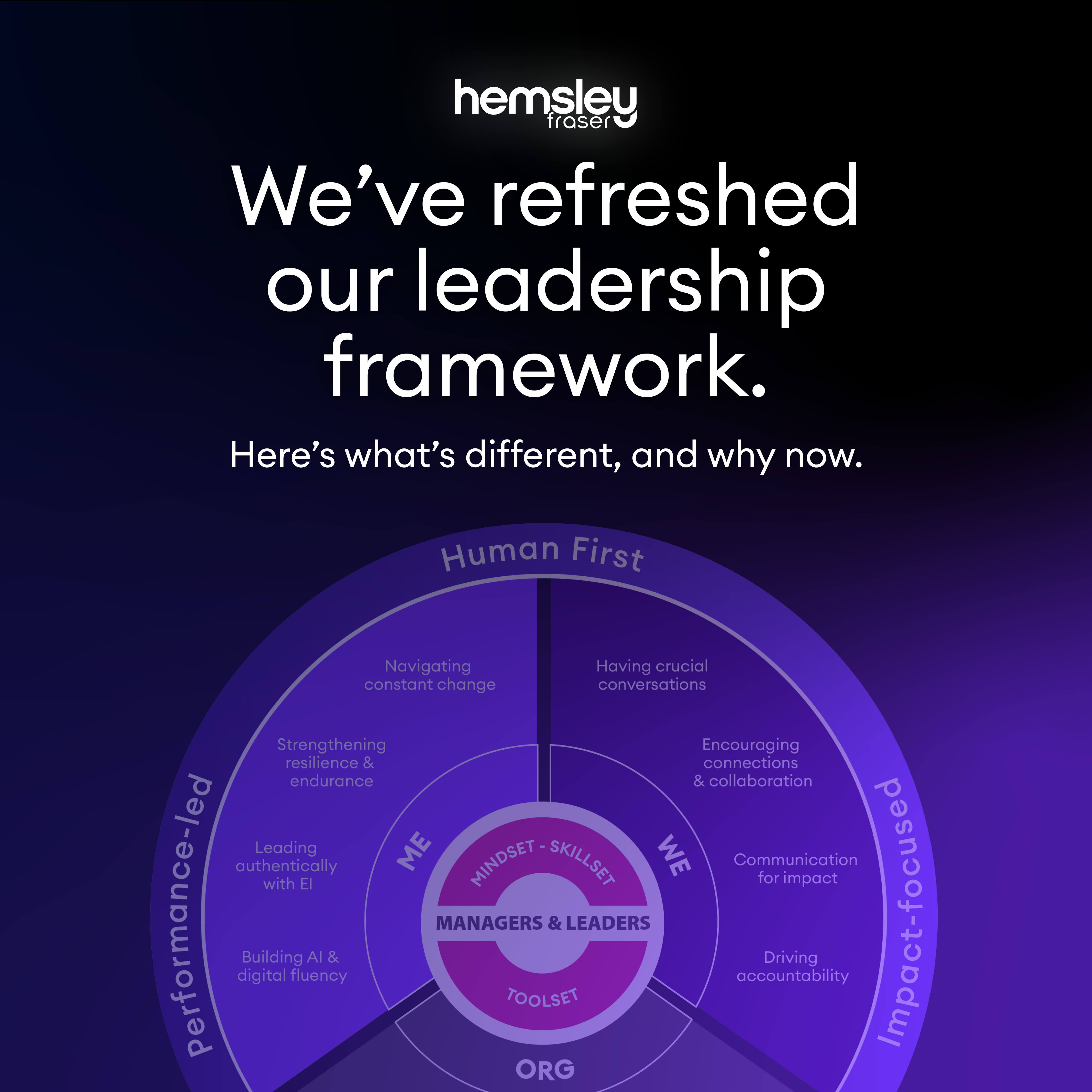
At the heart of our refreshed Management & Leadership Framework sit three words: mindset, toolset, skillset. Together they describe how capability turns into action.
Most development stops at the first two. Leaders leave a workshop with a new perspective and a useful model, then go back to a full inbox and the same old habits. The gap between knowing and doing is where good intentions go to die.
The evidence shows the cost. In our latest L&D Impact Survey, the single most common root cause of leadership gaps was the inability to give honest feedback and challenge underperformance. Leaders don't lack the knowledge. What's missing is the confidence and practice to use it in the moment.
Mindset
Mindset is how a leader thinks: their values, self-awareness and beliefs about what good leadership looks like.
Toolset
Toolset is what they know: the models, frameworks and techniques that give them a way in.
Skillset
Skillset is what they can actually do, consistently, when it matters.
6 leadership moments that matter (and the capabilities they test)
Every capability in the framework comes to life in a moment. Here are six that most leaders will recognise.
1. The feedback that's overdue. Performance has been parked since spring, and everyone knows it. This is where having crucial conversations and driving accountability meet: setting clear expectations, then having the courage, clarity and care to hold the line.
2. The change announcement. The plan is sound, but the people carrying it were briefed, not prepared. Communicating for impact means sharing what's known, acknowledging what isn't, and closing the gap between leadership and the frontline. McKinsey found companies are eight times as likely to report a successful transformation when senior leaders communicate openly and continually.
3. When AI gives you the answer. A tool produces a confident recommendation in seconds. Building AI & digital fluency means knowing how to use it well, and knowing when to question, override or disregard it. The decision, and the accountability, still sit with the human.
4. When someone is running on empty. A reliable team member starts missing deadlines and going quiet. Leading authentically with EI helps a leader notice and respond with empathy. Strengthening resilience & endurance reminds them to sustain their own capacity first, so they can support others through the same pressure.
5. The cross-team stalemate. Two teams need each other to deliver, but neither is moving. Encouraging connections & collaboration is about removing silos, building trust across boundaries and creating the safety for people to speak up.
6. The high potential who's thinking of leaving. They haven't said it, but the signs are there. Growing talent inclusively means spotting each person's strengths, having the career conversation early, and taking deliberate action to keep talent growing.
How can organisations prepare leaders for the moments that matter?
If leadership is proven in moments, development has to be designed around them. That means moving beyond one-off workshops to experiences that build confidence through practice. Four principles make the difference.
Start with the moment, not the model. Anchor every session in the real situations leaders face in their own roles, so the relevance is obvious from the first minute.
Practise before it's real. Skills are built by doing. Live workshops should give leaders space to rehearse difficult conversations, test their thinking and get honest feedback in a safe setting.
Learn alongside peers. Action learning sets let leaders tackle a live business challenge together, while peer coaching groups help them apply each skill between sessions and hold each other to account.
Keep support close to the moment. Short, on-demand Core Library resources mean a leader can refresh a technique the morning of a tough conversation, not three months after the workshop.
Proven across industries
Our work with Urenco won a Brandon Hall Group Silver for Best Leadership Development Programme, with every one of 24 behavioural indicators improving twelve weeks after completion. For a global technology and engineering group, a technical track rebuilt around human leadership behaviours produced 23% growth in the weakest behaviour. In finance and insurance, 90% of participants reported being better equipped for change.
Frequently asked questions
Our refreshed framework sets out 12 capabilities across Me, We and Organisation. Behind them are 100+ Core Library topics and programme designs that turn mindset and toolset into the skillset leaders need.
It describes the critical situations where a leader's behaviour has an outsized impact on trust, engagement and results. Examples include an overdue feedback conversation, a change announcement or a moment of personal pressure for a team member. How a leader acts in these moments defines how their team experiences their leadership.
Mindset is how a leader thinks: their values, beliefs and self-awareness. Toolset is what they know: the models and techniques they can draw on. Skillset is what they can reliably do under pressure. Effective leadership development builds all three, with a strong focus on skillset.
Our refreshed Management & Leadership Framework sets out 12 capabilities across three lenses: Me (leading self), We (leading team and people) and Organisation (leading the business). Four are new: building AI and digital fluency, strengthening resilience and endurance, communicating for impact, and driving accountability.
Close the gap with practice, not just knowledge. Give leaders safe spaces to rehearse real situations, peer learning such as action learning sets and peer coaching groups, on-demand resources they can use just before a key moment, and line managers who support them as they apply new skills.
AI is speeding up analysis and decisions, but it doesn't remove a leader's responsibility. Leaders need enough AI fluency to use the tools well, and the judgement to question, override or disregard AI outputs when needed. Accountability for people and decisions remains human.
Leadership isn't getting more technical. It's getting more human. And human leadership is measured in moments: the conversation held, the change explained, the judgement made, the person supported.